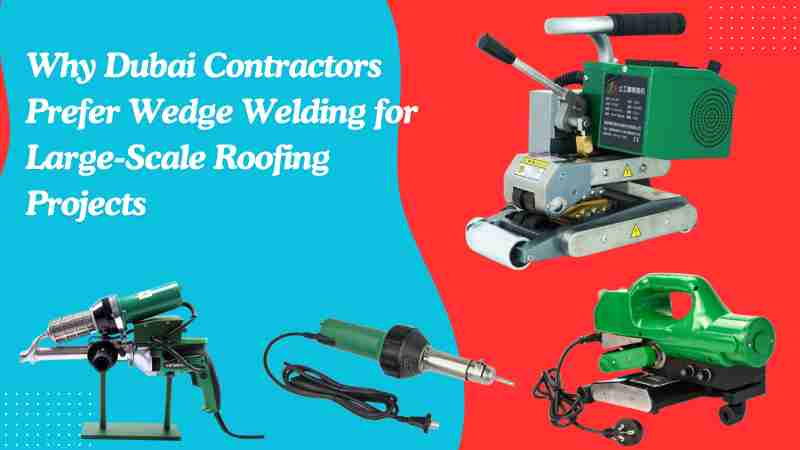
Dubai’s skyline continues its dramatic evolution with commercial towers, residential high-rises, industrial complexes, and mixed-use developments adding millions of square meters of roofing surface annually. These projects demand waterproofing systems capable of withstanding the emirate’s punishing climate—summer temperatures exceeding 50°C, intense UV radiation, occasional heavy rainfall, and sustained exposure to coastal salt air. As roofing contractors compete for these lucrative projects while managing aggressive schedules and stringent quality requirements, wedge welding technology has emerged as the preferred installation method for single-ply thermoplastic membranes. This comprehensive exploration examines why Dubai’s leading roofing contractors have embraced wedge welding, analyzing the technical advantages, economic benefits, quality outcomes, and competitive positioning that make this technology essential for success in the emirate’s demanding construction market.
The Dubai Roofing Market Context
Scale and Complexity of Projects
Dubai’s construction sector operates at extraordinary scale:
Commercial Developments: Office towers throughout Business Bay, DIFC (Dubai International Financial Centre), and Downtown Dubai feature roof areas ranging from 2,000 to 10,000 square meters per building. Projects like Dubai Creek Tower and various developments in Dubai South push these numbers even higher, with some individual roofs exceeding 20,000 square meters.
Industrial and Logistics Facilities: Dubai South, Jebel Ali Industrial Area, and other logistics zones host massive warehouse and distribution centers serving regional trade. These single-story structures often feature roof areas of 30,000-100,000 square meters or more—installations where efficient waterproofing methods prove absolutely essential for economic viability.
Residential High-Rises: Dubai Marina, Jumeirah Lake Towers, and emerging residential districts include hundreds of towers, each requiring comprehensive roofing protection. While individual building footprints may be modest, the collective volume creates sustained demand for efficient, reliable installation methods.
Mixed-Use Developments: Projects combining retail, residential, office, and hotel uses create complex roofing challenges with varying elevations, extensive mechanical equipment penetrations, and diverse occupancy requirements demanding absolute waterproofing reliability.
Climate-Driven Performance Requirements
Dubai’s environment creates demanding conditions for roofing systems:
Thermal Stress: Roof surface temperatures can exceed 70-75°C during summer months, creating thermal expansion and contraction cycles that stress waterproofing membranes and their seams. Only welding methods creating true molecular bonds withstand these conditions throughout decades of service.
UV Degradation: Intense solar radiation year-round accelerates material aging. Seaming methods must create bonds as UV-resistant as the base membrane material, ensuring seams don’t become weak points as systems age.
Wind Uplift: Coastal locations and high-rise installations experience substantial wind forces. Dubai Municipality and consulting engineers specify wind uplift resistance often exceeding 3 kPa, requiring seam strength that only properly executed welding achieves.
Occasional Precipitation: While annual rainfall averages less than 100mm, individual storm events can deliver 50-80mm in hours, creating temporary ponding and water infiltration pressure that inadequate seaming cannot withstand.
Technical Advantages of Wedge Welding
Superior Seam Strength and Reliability
Wedge welding creates molecular bonds providing exceptional performance:
Tensile Strength Achievement: Properly executed wedge welds achieve 85-95% of base membrane tensile strength, creating seams often stronger than adjacent material. This strength ensures seams don’t become failure points during wind events, thermal stress, or membrane aging.
Peel Resistance: Wedge-welded seams exhibit excellent peel resistance preventing delamination under uplift forces or differential thermal movement between membrane layers. Field testing consistently demonstrates peel forces exceeding specification minimums by substantial margins.
Long-Term Durability: Wedge welding creates true molecular interdiffusion between overlapping membrane layers. This molecular-level bond maintains integrity throughout membrane service life—typically 25-30 years for quality TPO and PVC installations—without degradation that might affect adhesive-bonded or mechanically-fastened seams.
Weather Resistance: Welded seams withstand moisture exposure, temperature extremes, and UV radiation as effectively as base membrane material. Unlike adhesive seams potentially affected by water infiltration or thermal cycling, welded joints maintain performance regardless of environmental exposure.
Speed and Installation Efficiency
Large-scale projects demand productive installation methods:
High Welding Speeds: Modern automated wedge welding equipment achieves speeds of 12-15 meters per minute on straight seams under optimal conditions. Even accounting for equipment repositioning, corner details, and quality control, production rates of 8-10 meters per minute prove readily achievable on large commercial and industrial roofs.
Productivity Calculations: Consider a 10,000 square meter roof requiring approximately 3,000 linear meters of seaming with typical 80mm overlaps. A crew using wedge welding equipment completing seams at average 8 meters per minute finishes primary seaming in approximately 375 minutes or 6.25 hours of actual welding time. Add time for material positioning, equipment movement, and quality testing, and a skilled crew completes the roof in 3-4 working days. Alternative methods might require 6-10 days for identical scope, dramatically affecting project schedules and costs.
Labor Efficiency: Wedge welding reduces crew size requirements compared to manual methods. Two operators—one managing equipment and one handling material positioning—efficiently complete most wedge welding operations. This smaller crew requirement reduces labor costs while simplifying site logistics and supervision.
Schedule Compression: Dubai’s construction sector operates under aggressive timelines with substantial penalties for delays. Wedge welding’s speed advantage enables compressed schedules meeting or beating challenging deadlines, creating competitive advantages during bidding while reducing financing costs through earlier project completion.
Consistent Quality Outcomes
Automated processes deliver superior quality consistency:
Reduced Human Error: Wedge welding mechanizes the seaming process, eliminating variability from operator technique, fatigue, or concentration lapses. Once proper parameters are established for specific materials and conditions, equipment delivers consistent results regardless of operator experience level variations.
Parameter Control: Modern equipment incorporates digital temperature controls, speed regulation, and pressure systems maintaining precise operating conditions. These control systems automatically adjust for minor variables, ensuring consistent seam quality across entire installations. Working with a reliable wedge welding equipment Dubai supplier ensures contractors access machinery incorporating these advanced capabilities essential for large-project quality assurance.
Real-Time Monitoring: Advanced equipment features displays and alarms alerting operators immediately if parameters drift outside acceptable ranges. This real-time feedback prevents defective seam production that might continue unnoticed with manual methods until testing reveals problems.
Reduced Rework: Consistent quality from initial installation minimizes rework requirements. On large roofing projects, eliminating even 2-3% rework translates to substantial time and material savings while avoiding schedule disruptions and crew inefficiencies from corrective work.
Economic Benefits for Contractors
Direct Cost Advantages
Wedge welding delivers measurable financial benefits:
Labor Cost Reduction: Despite equipment investment, wedge welding reduces per-square-meter labor costs through superior productivity. Labor typically represents 30-50% of roofing installation costs, making productivity improvements directly impact project profitability.
Material Efficiency: Consistent welding quality minimizes membrane waste from defective installations requiring removal and replacement. On large projects, material waste reduction of 2-3% represents thousands of dirhams in saved material costs.
Equipment Utilization: While quality wedge welding equipment represents significant capital investment (AED 40,000-150,000 depending on features and automation level), high utilization across multiple large projects amortizes costs quickly. A machine used on 100,000 square meters of roofing annually (modest volume for active Dubai contractors) incurs equipment cost of less than AED 1 per square meter over typical 5-7 year service life.
Overhead Efficiency: Smaller crew requirements reduce indirect costs including transportation, supervision, site facilities, and safety equipment. These overhead reductions, while individually modest, accumulate substantially across large-project portfolios.
Competitive Positioning Advantages
Equipment capabilities influence market positioning:
Bid Qualification: Major projects increasingly require contractors demonstrate appropriate equipment capabilities during prequalification. Ownership of or access to modern wedge welding equipment proves essential for qualifying on premium projects that budget-focused competitors without proper equipment cannot access.
Schedule Commitments: Confident completion schedules backed by proven equipment capabilities make bids more attractive to clients facing time pressures. Developers and building owners increasingly value schedule certainty, sometimes accepting slightly higher pricing from contractors demonstrating superior scheduling reliability.
Quality Reputation: Consistent delivery of quality installations using advanced methods builds contractor reputation that translates to repeat business and premium project access. Dubai’s construction community, while large, maintains networks where quality reputation significantly influences project awards.
Value Engineering: Contractors with sophisticated equipment can propose value engineering alternatives on projects initially specifying less efficient methods, potentially winning projects through technical superiority rather than pure price competition.
Quality Assurance and Documentation
Testing and Verification
Large-scale projects demand rigorous quality control:
Non-Destructive Testing: Dual-channel wedge welding enables air pressure testing between parallel weld beads, verifying seam continuity without damaging the installation. This testing method, specified on virtually all major Dubai projects, provides quality assurance impossible with single-pass welding approaches.
Destructive Test Compliance: Specifications typically require destructive peel testing at intervals of 150-300 linear meters. Wedge welding’s consistent quality ensures test samples routinely exceed minimum requirements, while alternative methods may produce marginal or failing results requiring corrective action.
Data Logging Capabilities: Modern wedge welding equipment records welding parameters throughout operations, creating permanent digital quality records. This documentation satisfies increasingly stringent quality assurance requirements from Dubai Municipality, consulting engineers, and sophisticated building owners while providing valuable protection if warranty claims arise years after installation.
Third-Party Verification: Large projects often require independent quality assurance oversight by third-party consultants or membrane manufacturers’ representatives. These specialists favor wedge welding for its systematic approach and comprehensive testing capabilities, sometimes explicitly requiring or strongly recommending the method over alternatives.
Warranty and Liability Management
Quality installations protect contractors from long-term liability:
Manufacturer Warranty Support: Membrane manufacturers offer extended warranties—often 20 years for TPO and PVC systems—on installations meeting their requirements. These requirements increasingly favor or mandate wedge welding for large projects, recognizing the method’s superior reliability compared to alternatives.
Reduced Callback Risk: Quality seaming minimizes warranty callbacks from premature failures. Callbacks not only incur direct repair costs but also damage contractor reputation and consume resources better devoted to new revenue-generating projects.
Professional Liability Protection: Demonstrable use of industry-best-practice methods including wedge welding provides important protection if professional liability claims arise. Courts and arbitrators view contractor deployment of appropriate advanced methods favorably when evaluating negligence claims.
Material Compatibility and Application Flexibility
Thermoplastic Membrane Types
Wedge welding suits primary roofing membrane materials:
TPO (Thermoplastic Polyolefin): The most popular single-ply roofing material in UAE market, TPO offers excellent heat resistance, UV stability, and white reflective surface reducing cooling loads. Wedge welding creates optimal seams in TPO, with welding temperatures of 180-200°C producing reliable fusion across all major TPO brands and formulations.
PVC (Polyvinyl Chloride): Long-established roofing material with proven Dubai performance, PVC welds at slightly lower temperatures (160-180°C) but otherwise suits wedge welding ideally. Some contractors prefer PVC for specific applications including roofs with extensive chemical exposure or where higher flexibility proves beneficial.
KEE (Ketone Ethylene Ester): Advanced polymer gaining market share for premium applications, KEE combines TPO’s performance characteristics with enhanced flexibility and chemical resistance. Wedge welding equipment easily accommodates KEE’s processing requirements with minor parameter adjustments.
Complementary Detail Work
While wedge welding excels for field seams, comprehensive installations require complementary methods:
Hot Air Detail Welding: Penetrations, corners, terminations, and repairs require handheld hot air welding providing precision and flexibility where automated equipment cannot operate. Progressive contractors maintain equipment portfolios including both automated wedge welders and quality hot air equipment from sources like an advanced extrusion welding equipment UAE distributor, ensuring comprehensive capabilities for complete roof installations.
Induction Welding: Some applications may utilize induction welding for specialized details, particularly on occupied buildings where open flame or hot air processes present fire safety concerns. This complementary technology expands contractor capabilities while maintaining safety standards.
Environmental and Sustainability Considerations
Green Building Alignment
Wedge welding supports Dubai’s sustainability initiatives:
VOC Elimination: Unlike adhesive-based seaming methods releasing volatile organic compounds, wedge welding generates no chemical emissions during installation. This environmental benefit supports LEED certification, BREEAM ratings, and Estidama Pearl standards increasingly specified on Dubai projects.
Energy Efficiency: White TPO and PVC membranes installed with wedge welding reflect solar radiation, reducing building cooling loads by 20-40% compared to dark-colored roofing. This energy efficiency contributes meaningfully to Dubai’s cooling-dominated energy consumption patterns where HVAC represents 60-70% of building energy use.
Material Recyclability: Thermoplastic membranes installed with wedge welding are fully recyclable at end of service life, supporting circular economy principles. Quality installations reaching design service life maximize material utilization before recycling becomes necessary.
Longevity and Resource Conservation: Superior seam reliability extends roof system service life, reducing replacement frequency and associated environmental impacts from manufacturing, transportation, and disposal of failed systems.
Training and Workforce Development
Operator Skill Requirements
Wedge welding equipment demands specific training:
Equipment Operation: While wedge welding reduces seaming variability compared to manual methods, proper equipment operation requires understanding parameter selection, equipment setup, troubleshooting, and quality recognition. Most contractors invest 1-2 weeks training new operators before allowing independent work.
Material Knowledge: Different membrane brands and formulations require subtle parameter adjustments. Experienced operators understand these variations and make appropriate modifications achieving optimal results across diverse materials.
Quality Control Skills: Operators must recognize proper seam appearance, understand testing procedures, and identify defective welds requiring correction. This quality consciousness, developed through training and experience, proves as important as mechanical equipment operation skills.
Certification Programs
Industry certifications support workforce development:
Manufacturer Training: Membrane manufacturers and equipment suppliers offer training programs covering proper installation techniques and equipment operation. These programs typically conclude with practical assessments verifying competency.
Industry Credentials: Organizations including roofing industry associations offer certification programs for installers and supervisors. These credentials demonstrate professional competency while meeting specifications requiring certified personnel on major projects.
Future Trends and Technology Evolution
Equipment Advancement
Ongoing development promises enhanced capabilities:
Automation Enhancement: Emerging equipment features including GPS guidance, automatic parameter adjustment based on environmental sensors, and enhanced data analytics will further improve consistency while reducing operator skill requirements.
Robotic Systems: Autonomous welding robots capable of navigating roof surfaces with minimal human intervention represent longer-term developments that may transform large-scale roofing installation, though human oversight will remain essential for quality assurance and complex details.
IoT Integration: Internet-connected equipment enabling remote monitoring, predictive maintenance, and fleet management will help contractors optimize equipment utilization while proactively addressing service needs before failures disrupt projects.
Market Evolution
Dubai’s roofing sector continues developing:
Specification Trends: Consulting engineers and architects increasingly specify wedge welding explicitly or through performance requirements that effectively mandate the method, reducing contractor discretion while raising industry quality standards.
Quality Competition: As more contractors adopt advanced equipment and methods, competitive differentiation shifts from basic capability to execution quality, customer service, and value-added services. This evolution favors established contractors with proven track records over newcomers competing purely on price.
International Standards: Dubai’s continued integration with international construction markets drives adoption of global best practices including welding methods, testing protocols, and quality documentation that align with standards in North America, Europe, and other developed markets.
Conclusion
Dubai contractors’ preference for wedge welding on large-scale roofing projects stems from compelling technical, economic, and competitive advantages that make the technology essential for success in the emirate’s demanding construction market. The combination of superior seam strength, installation efficiency, consistent quality, comprehensive testing capabilities, and alignment with sustainability goals creates value propositions that alternative seaming methods cannot match.
As Dubai’s construction sector continues expanding with increasingly sophisticated quality requirements, environmental standards, and schedule pressures, wedge welding technology’s importance will only grow. Contractors investing in quality equipment, comprehensive training, and systematic quality control position themselves for long-term success, accessing premium projects while building reputations that translate to sustained competitive advantages in one of the world’s most dynamic construction markets.
For roofing contractors, equipment suppliers, building owners, and construction managers, understanding wedge welding’s capabilities and requirements ensures informed decisions supporting successful project outcomes, contractor profitability, and building envelope protection that will serve Dubai’s remarkable infrastructure for decades to come.